
Utilities
Complaints management during peak demand
Customer Service Operations / HR
Clarifall-Complaint
A sharp rise in the volume of complaints pushed the existing processing system to its limits. Cases were largely processed in the order in which they were received, regardless of how close a statutory deadline was approaching. Routine enquiries and time-sensitive cases thus ended up in the same queue, whilst a growing backlog made it difficult to maintain an overview. There was no systematic process in place to identify risks at an early stage and automatically adjust processing accordingly.
When there are significant fluctuations in the volume of incoming requests, processing them in the order they are received is no longer sufficient. Critical cases may be held up amongst routine enquiries, whilst at the same time creating additional manual work.
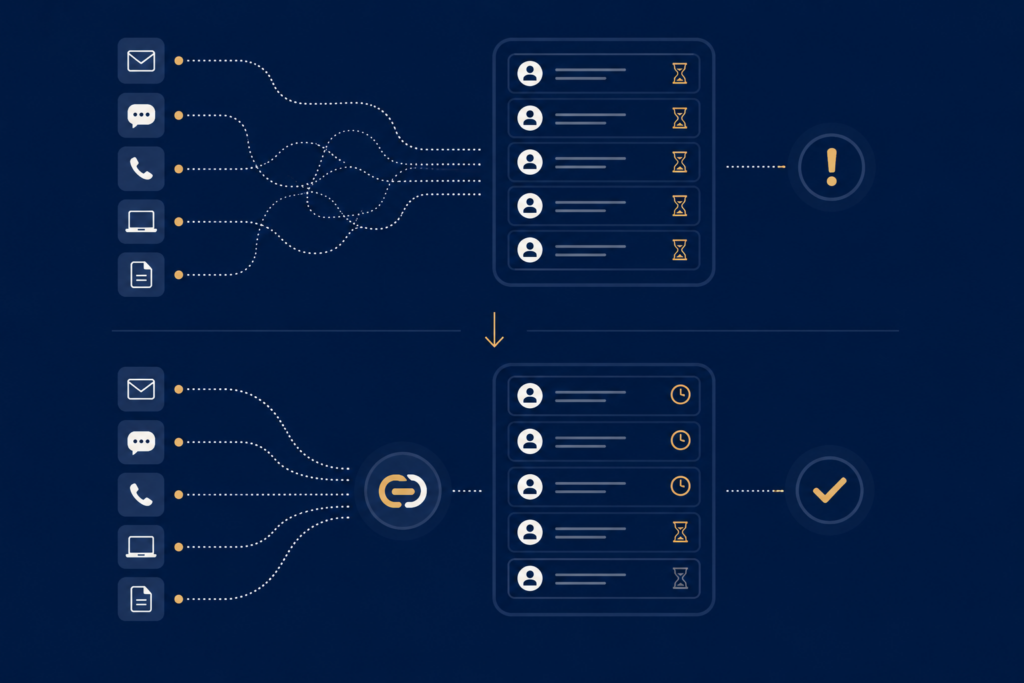
The previous approach mainly dealt with peaks by relying on overtime and short-term support. Clarifall, on the other hand, focuses on managing the inflow of cases and the order in which they are processed.
Every case is automatically recorded and classified upon receipt. The order in which they are processed is then prioritised based on how close they are to the deadline. This ensures that even the busiest periods result in an organised list of priorities.
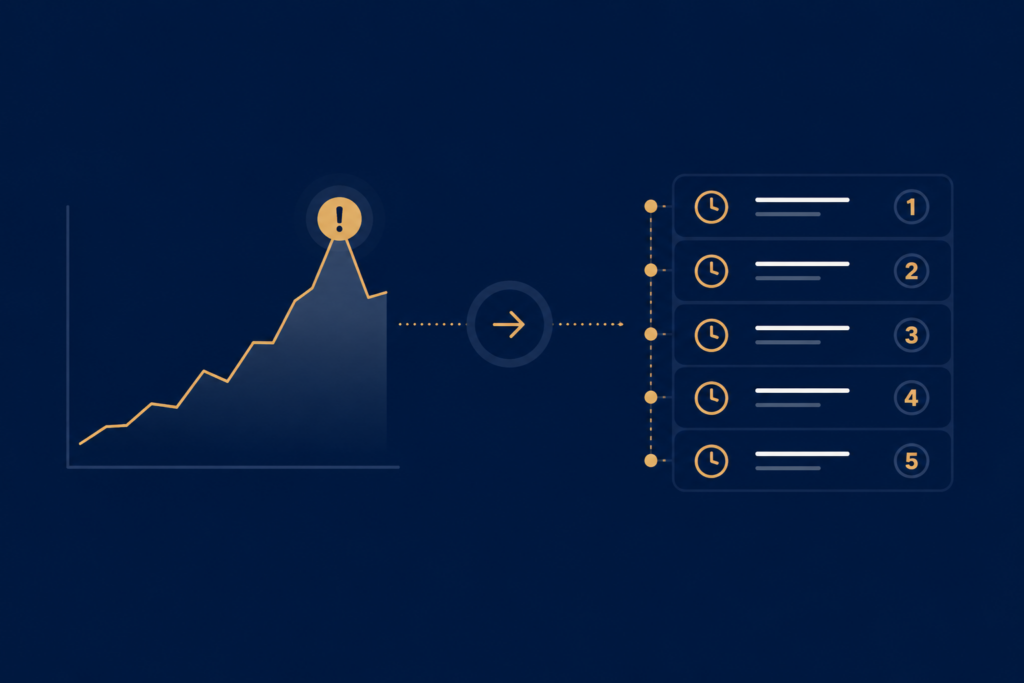
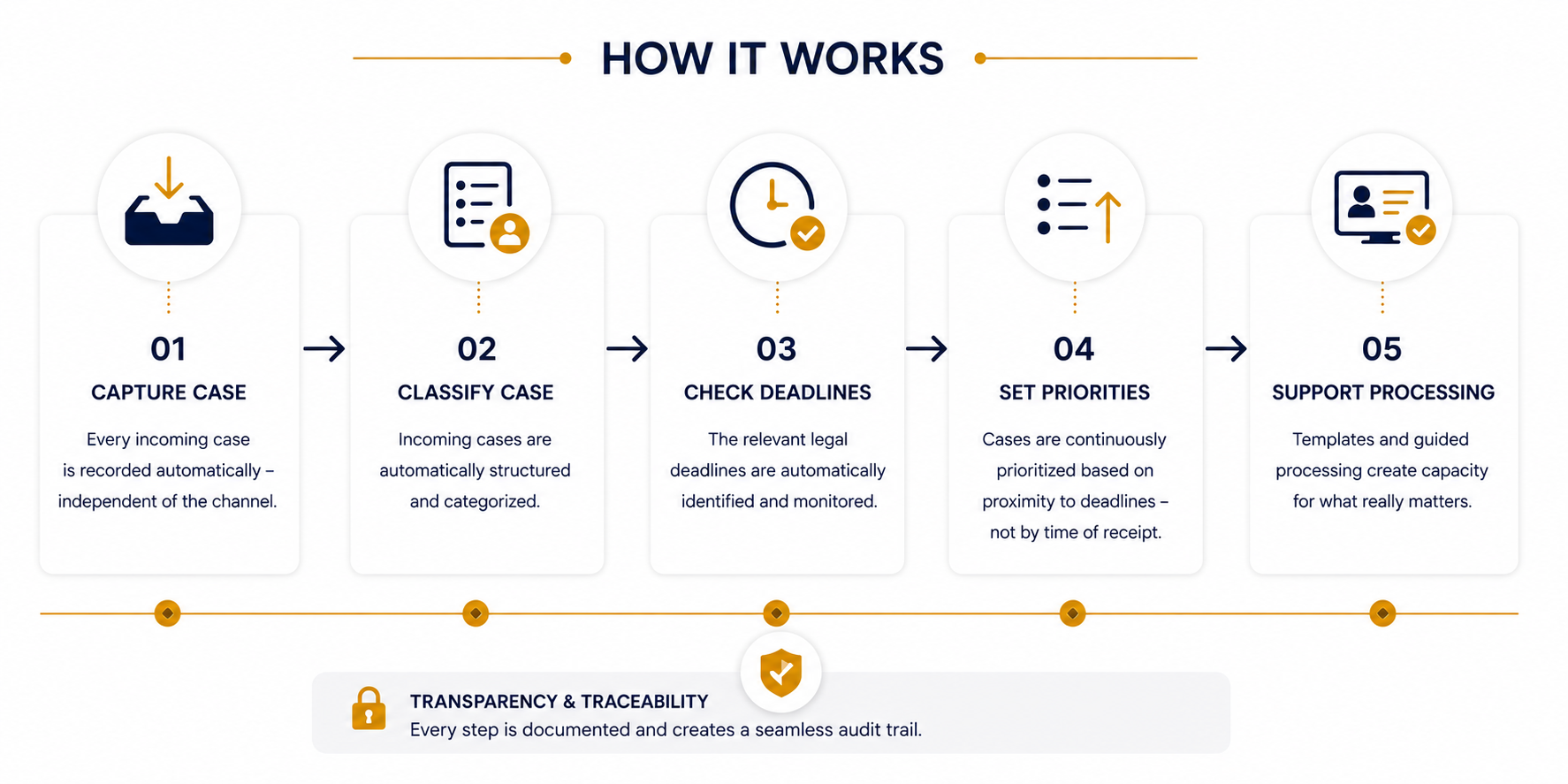
Cases are largely processed in the order in which they are received. Routine enquiries and time-sensitive cases end up in the same queue and are initially treated equally. As the volume increases, the backlog grows, and cases with tight statutory deadlines may end up waiting behind less urgent matters. The team must therefore identify for themselves which cases are particularly critical and manage the prioritisation manually.
Clarifall continuously assesses open cases based on how close they are to their deadline and reorders the queue accordingly. Cases with the highest risk of missing a deadline are automatically moved to the top of the list and remain visible even when the volume of work increases significantly. This allows the team to focus first on the cases where time is particularly critical, whilst routine cases can be dealt with in a structured manner at a later stage.
Clarifall helps the existing team to work in a structured manner even when there is a significant increase in incoming work, to identify deadline risks at an early stage and to avoid the need for additional manual capacity.
Statutory deadlines are monitored automatically, ensuring that critical cases are identified in good time.
Cases are prioritised according to how close they are to the deadline – not simply according to when they were received.
Even when there is a high volume of enquiries, cases are automatically recorded and processed in a structured manner.
Automated classification and template-based processing take the pressure off the team.
Current backlogs and at-risk cases are brought to the management’s attention at an early stage.
An immutable audit trail provides a complete record of the processing of each case.