
Utilities / Energy
Complaints Management & Case Management
Intake Routing Processing Investigation Response Evaluation
Clarifall
Scattered information, different intake channels and manual handover processes made end-to-end case management difficult. Responsibilities were not always clearly defined, relevant customer and case details were stored in different systems, and important insights could be lost in day-to-day operations. The challenge therefore lay not only in processing cases more quickly, but also in managing them in a structured manner, documenting them in a traceable way and systematically deriving insights from them for future processes.
Customer enquiries reach companies through various channels. Responsibilities, information and follow-up processes are often spread across different departments. This results in manual handover, a lack of context and unnecessary complexity.
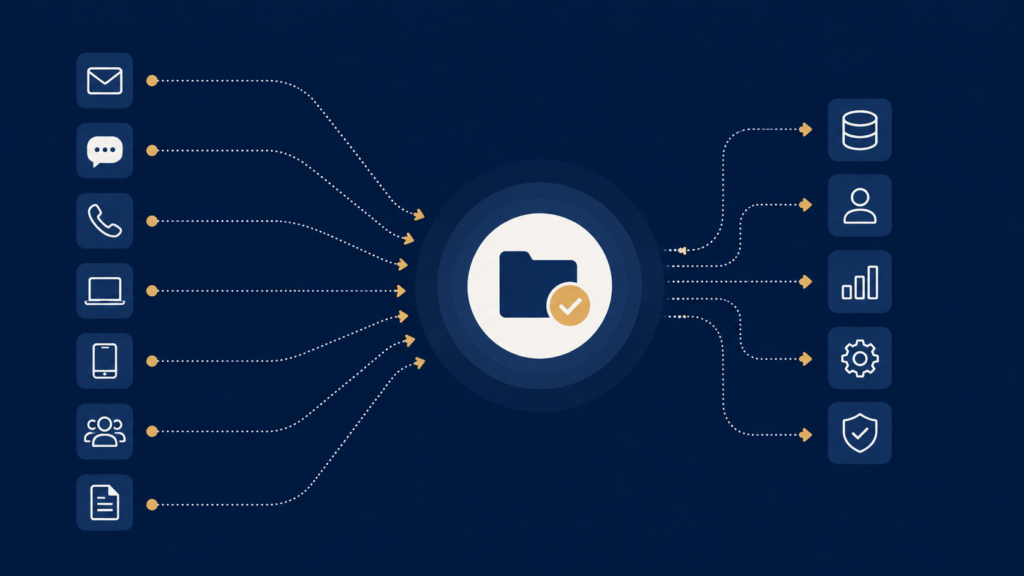
The key change is the shift from a purely operational approach to a controlled decision-making framework.
Clarifall coordinates the case lifecycle and makes responsibilities, rules, and next steps transparent.
Record cases centrally, define responsibilities and manage deadlines effectively.
Route cases effectively, provide relevant information and manage the processing in a structured manner.
Identify causes and recurring patterns, and draw operational insights from them.
Identify relevant signals and route them specifically to the appropriate follow-up processes.
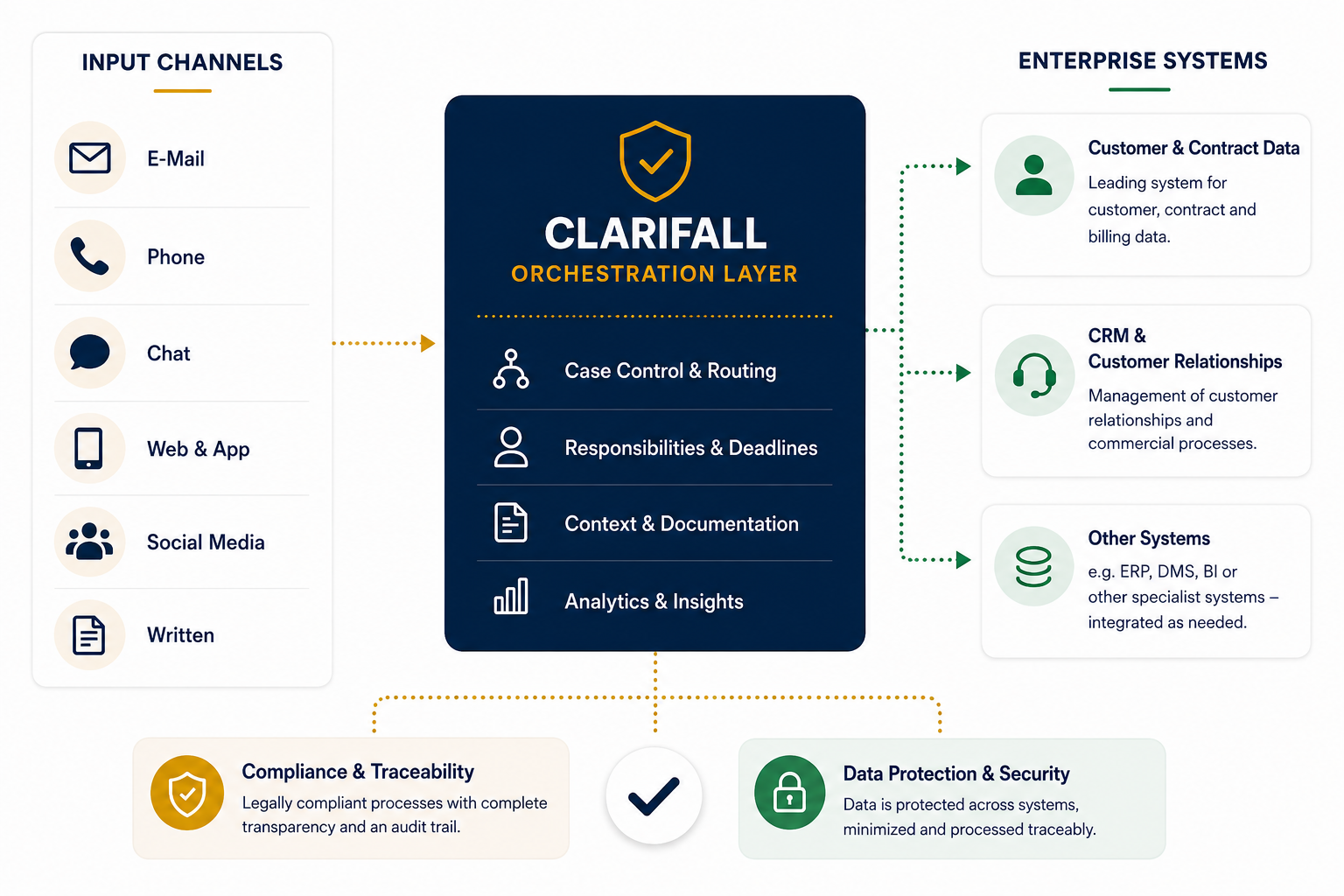
Information relating to customer enquiries is scattered across various channels and systems. Responsibilities sometimes have to be clarified manually, and cases have to be transferred between different handling processes. As a result, the relevant customer and case context is not consistently available. Insights gained from individual cases often remain confined to day-to-day operations and cannot be systematically utilised for further decision-making.
Clarifall brings together relevant information in a central case file and creates a clear structure for case handling. Responsibilities, deadlines and next steps are managed transparently. The relevant customer and case context is consolidated and made available for processing. At the same time, causes, patterns and relevant indicators can be systematically identified and utilised in subsequent processes.
Relevant information and the current case status are available centrally and can be easily traced.
Responsibilities and next steps are clearly assigned and managed transparently.
Cases are processed, routed and handled in a targeted manner in accordance with defined rules.
Decisions, processing steps and relevant information remain documented and verifiable.