
Utilities
Complaints management during peak demand
Customer Service Operations / HR
Clarifall-Complaint
A sharp rise in the volume of complaints pushed the existing processing system to its limits. Cases were largely processed in the order in which they were received, regardless of how close a statutory deadline was approaching. Routine enquiries and time-sensitive cases thus ended up in the same queue, whilst a growing backlog made it difficult to maintain an overview. There was no systematic process in place to identify risks at an early stage and automatically adjust processing accordingly.
When there are significant fluctuations in the volume of incoming requests, processing them in the order they are received is no longer sufficient. Critical cases may be held up amongst routine enquiries, whilst at the same time creating additional manual work.
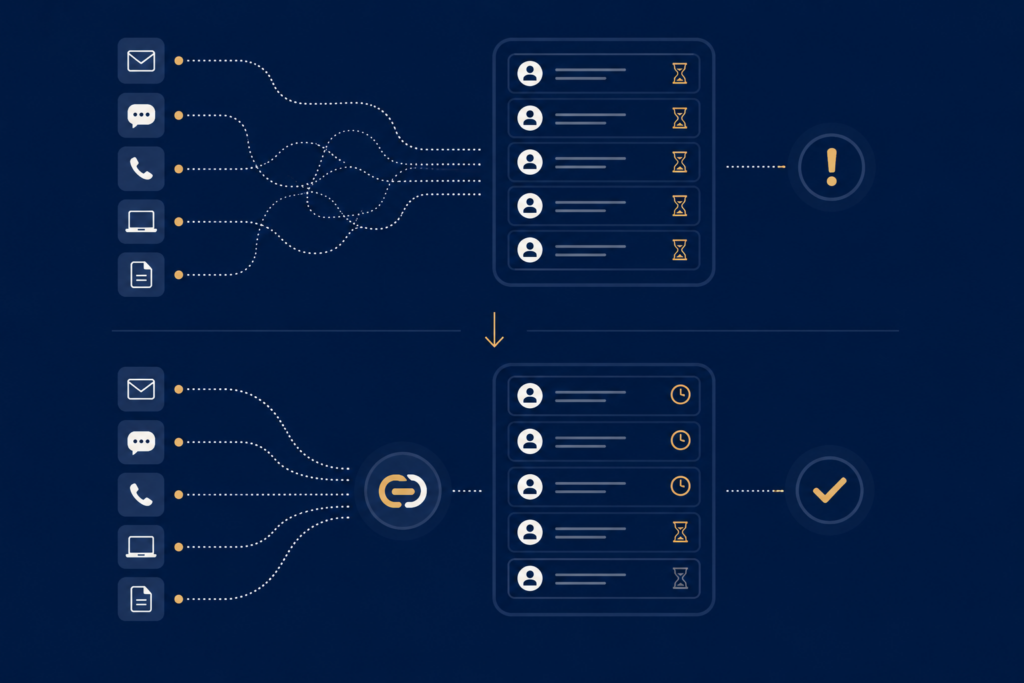
The previous approach mainly dealt with peaks by relying on overtime and short-term support. Clarifall, on the other hand, focuses on managing the inflow of cases and the order in which they are processed.
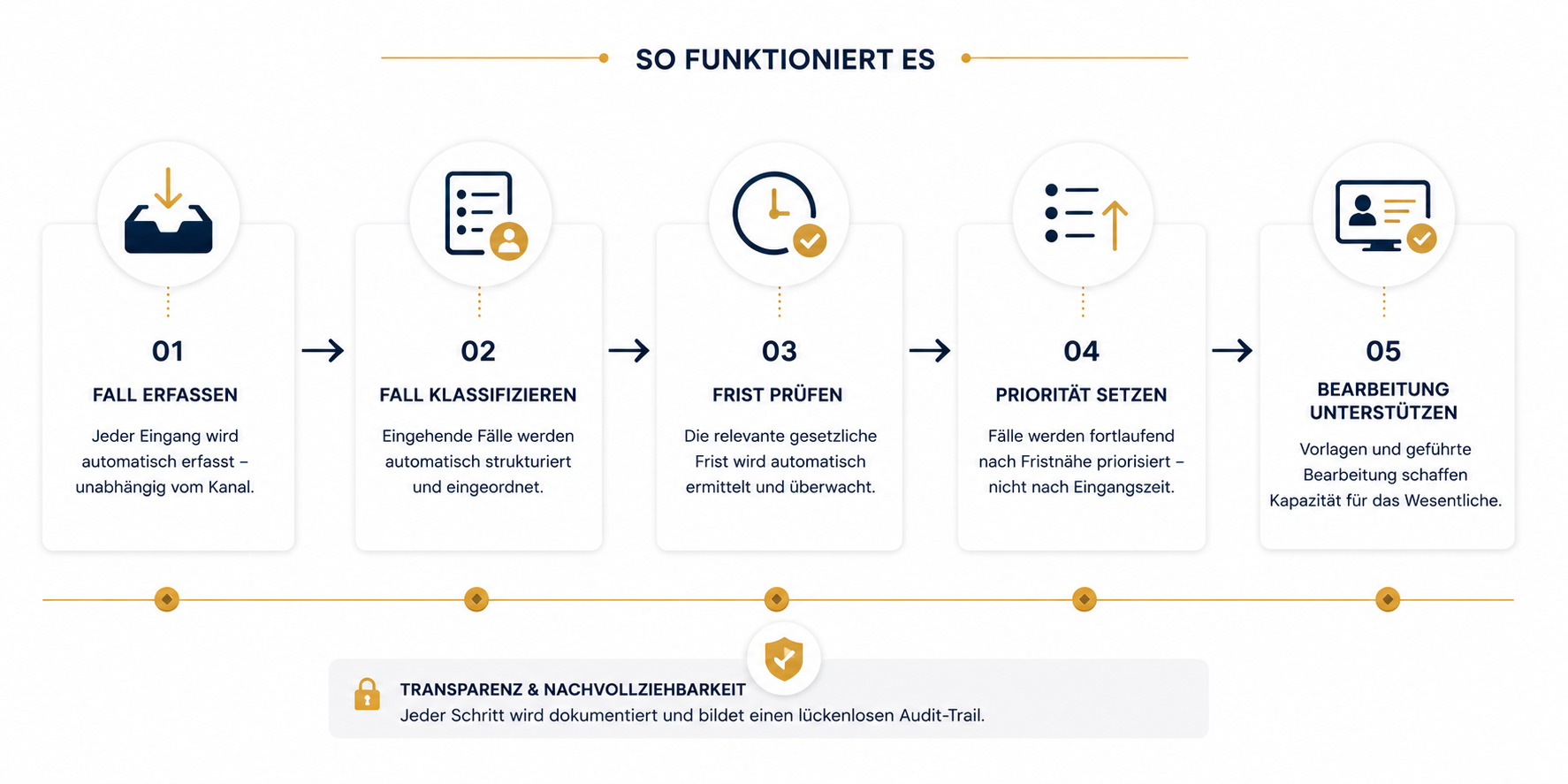
Every case is automatically recorded and classified upon receipt. The order in which they are processed is then prioritised based on how close they are to the deadline. This ensures that even the busiest periods result in an organised list of priorities.
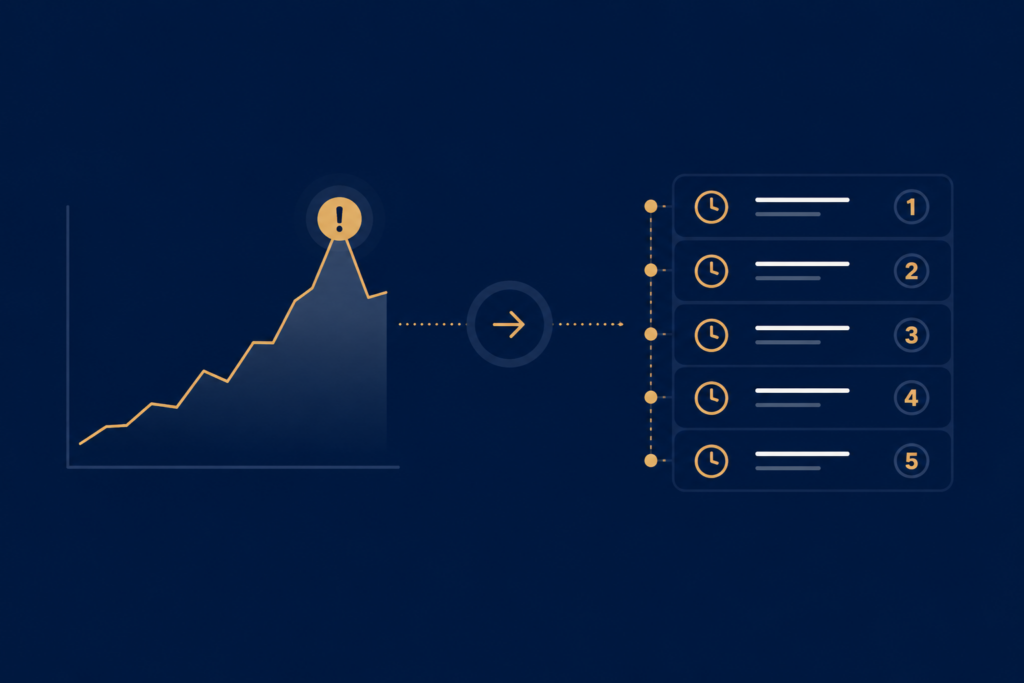
Die Bearbeitung erfolgt weitgehend in der Reihenfolge des Eingangs. Routineanfragen und fristkritische Fälle landen dabei in derselben Warteschlange und werden zunächst gleich behandelt. Steigt das Volumen, wächst der Rückstand und Fälle mit knappen gesetzlichen Fristen können zwischen weniger dringenden Anliegen warten. Das Team muss dadurch selbst erkennen, welche Fälle besonders kritisch sind, und die Priorisierung manuell steuern.
Clarifall bewertet die offenen Fälle fortlaufend anhand ihrer Fristnähe und ordnet die Warteschlange entsprechend neu. Fälle mit dem höchsten Fristrisiko werden automatisch nach oben gestellt und bleiben auch bei stark steigendem Volumen sichtbar. So konzentriert sich das Team zuerst auf die Fälle, bei denen die Zeit besonders kritisch ist, während Routinefälle strukturiert nachgelagert bearbeitet werden können.
Clarifall unterstützt das bestehende Team dabei, auch bei stark erhöhtem Eingang strukturiert zu arbeiten, Fristrisiken früh zu erkennen und zusätzliche manuelle Kapazität zu vermeiden.
Gesetzliche Fristen werden automatisch überwacht, sodass kritische Fälle rechtzeitig sichtbar werden.
Fälle werden nach Fristnähe priorisiert – nicht einfach nach dem Zeitpunkt ihres Eingangs.
Auch bei hohem Anfragevolumen werden Fälle automatisch erfasst und strukturiert verarbeitet.
Automatisierte Klassifizierung und vorlagenunterstützte Bearbeitung entlasten das Team.
Aktuelle Warteschlangen und gefährdete Fälle werden frühzeitig für die Führung sichtbar.
Ein unveränderbarer Audit-Trail dokumentiert die Bearbeitung jedes Falls lückenlos.